 Add to Chrome
 Add to Firefox
 Add to Edge
Quantum-Native Maximum Likelihood Detection in Random Access Channel with Overloaded MIMO
May 19, 2026
In this paper, we propose a quantum-native formulation of maximum likelihood detection (MLD) for overloaded multiple-input multiple-output (MIMO) systems in a random access channel, where numerous user terminals share the same channel resource and asynchronously transmit signals. Classical linear detectors suffer from significant performance degradation in this scenario, whereas the exhaustive-search MLD achieves the optimal performance but incurs an exponential computational complexity. To overcome this trade-off, we formulate the MLD as a binary optimization problem and solve it via Grover adaptive search (GAS) -- a quantum exhaustive search algorithm offering quadratic speedup in fault-tolerant quantum computing. We then introduce a search space reduction technique to substantially decrease the required computational resources. In addition, we investigate efficient parameter settings for GAS through probability analysis to improve convergence performance. We demonstrate that the proposed detector achieves the optimal detection performance while reducing the required Grover rotation count to reach the solution by up to approximately 65% compared with the conventional GAS, showing its potential as a viable solution for future quantum-accelerated wireless systems.

Temper and Tilt Lead to SLOP: Reward Hacking Mitigation with Inference-Time Alignment
May 13, 2026Inference-time alignment techniques offer a lightweight alternative or complement to costly reinforcement learning, while enabling continual adaptation as alignment objectives and reward targets evolve. Existing theoretical analyses justify these methods as approximations to sampling from distributions optimally tilted toward a given reward model. We extend these techniques by introducing reference-model temperature adjustment, which leads to further generalization of inference-time alignment to ensembles of generative reward models combined as a sharpened logarithmic opinion pool (SLOP). To mitigate reward hacking, we propose an algorithm for calibrating SLOP weight parameters and experimentally demonstrate that it improves robustness while preserving alignment performance.
Directional Embedding Smoothing for Robust Vision Language Models
Mar 16, 2026The safety and reliability of vision-language models (VLMs) are a crucial part of deploying trustworthy agentic AI systems. However, VLMs remain vulnerable to jailbreaking attacks that undermine their safety alignment to yield harmful outputs. In this work, we extend the Randomized Embedding Smoothing and Token Aggregation (RESTA) defense to VLMs and evaluate its performance against the JailBreakV-28K benchmark of multi-modal jailbreaking attacks. We find that RESTA is effective in reducing attack success rate over this diverse corpus of attacks, in particular, when employing directional embedding noise, where the injected noise is aligned with the original token embedding vectors. Our results demonstrate that RESTA can contribute to securing VLMs within agentic systems, as a lightweight, inference-time defense layer of an overall security framework.
Amplification Effects in Test-Time Reinforcement Learning: Safety and Reasoning Vulnerabilities
Mar 16, 2026Test-time training (TTT) has recently emerged as a promising method to improve the reasoning abilities of large language models (LLMs), in which the model directly learns from test data without access to labels. However, this reliance on test data also makes TTT methods vulnerable to harmful prompt injections. In this paper, we investigate safety vulnerabilities of TTT methods, where we study a representative self-consistency-based test-time learning method: test-time reinforcement learning (TTRL), a recent TTT method that improves LLM reasoning by rewarding self-consistency using majority vote as a reward signal. We show that harmful prompt injection during TTRL amplifies the model's existing behaviors, i.e., safety amplification when the base model is relatively safe, and harmfulness amplification when it is vulnerable to the injected data. In both cases, there is a decline in reasoning ability, which we refer to as the reasoning tax. We also show that TTT methods such as TTRL can be exploited adversarially using specially designed "HarmInject" prompts to force the model to answer jailbreak and reasoning queries together, resulting in stronger harmfulness amplification. Overall, our results highlight that TTT methods that enhance LLM reasoning by promoting self-consistency can lead to amplification behaviors and reasoning degradation, highlighting the need for safer TTT methods.
Geo-ADAPT-VQE: Quantum Information Metric-Aware Circuit Optimization for Quantum Chemistry
Mar 11, 2026Adaptive ansatz construction has emerged as a powerful technique for reducing circuit depth and improving optimization efficiency in variational quantum eigensolvers. However, existing adaptive methods, including ADAPT-VQE, rely solely on first-order gradients and therefore ignore the underlying geometry of the quantum state space, limiting both convergence behavior and operator-selection efficiency. We introduce Geo-ADAPT-VQE, a geometry-aware adaptive VQE algorithm that selects operators from a pool using the natural gradient rule. The geometric operator-selection rule enables the ansatz to grow along directions aligned with the underlying quantum-state geometry, thereby improving convergence and reducing the algorithm's susceptibility to shallow local minima and saddle-point regions. We further provide an asymptotic convergence result. We present numerical simulations involving five molecules, which demonstrate that Geo-ADAPT-VQE achieves faster and more stable convergence compared to existing methods, while producing significantly shorter ansatz. In particular, Geo-ADAPT achieves up to 100-fold reduction in energy error compared to existing methods.
AWP: Activation-Aware Weight Pruning and Quantization with Projected Gradient Descent
Jun 11, 2025To address the enormous size of Large Language Models (LLMs), model compression methods, such as quantization and pruning, are often deployed, especially on edge devices. In this work, we focus on layer-wise post-training quantization and pruning. Drawing connections between activation-aware weight pruning and sparse approximation problems, and motivated by the success of Iterative Hard Thresholding (IHT), we propose a unified method for Activation-aware Weight pruning and quantization via Projected gradient descent (AWP). Our experiments demonstrate that AWP outperforms state-of-the-art LLM pruning and quantization methods. Theoretical convergence guarantees of the proposed method for pruning are also provided.
TuneComp: Joint Fine-tuning and Compression for Large Foundation Models
May 27, 2025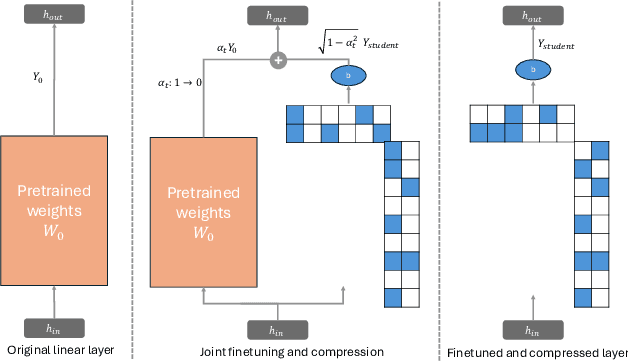
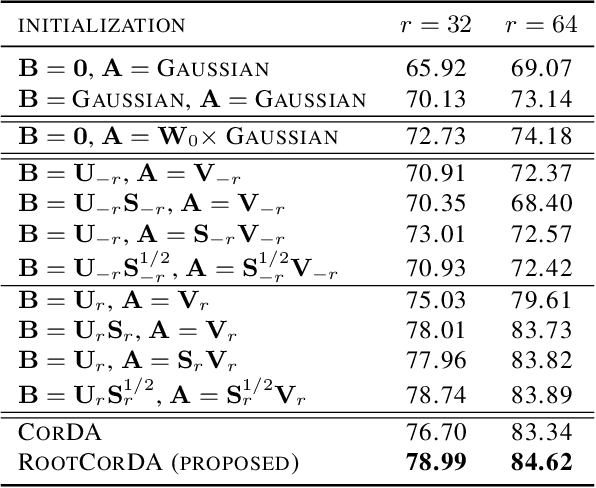
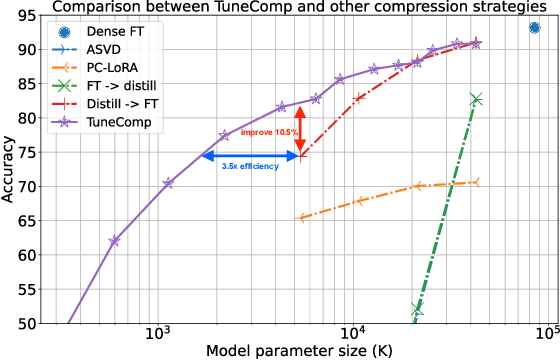

To reduce model size during post-training, compression methods, including knowledge distillation, low-rank approximation, and pruning, are often applied after fine-tuning the model. However, sequential fine-tuning and compression sacrifices performance, while creating a larger than necessary model as an intermediate step. In this work, we aim to reduce this gap, by directly constructing a smaller model while guided by the downstream task. We propose to jointly fine-tune and compress the model by gradually distilling it to a pruned low-rank structure. Experiments demonstrate that joint fine-tuning and compression significantly outperforms other sequential compression methods.
$μ$-MoE: Test-Time Pruning as Micro-Grained Mixture-of-Experts
May 24, 2025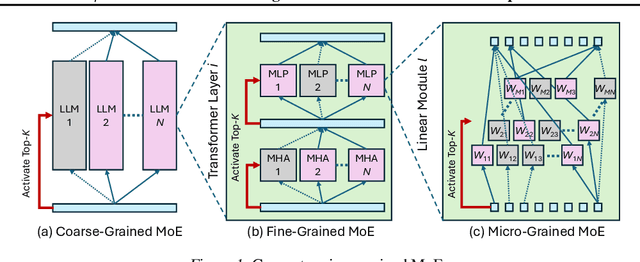
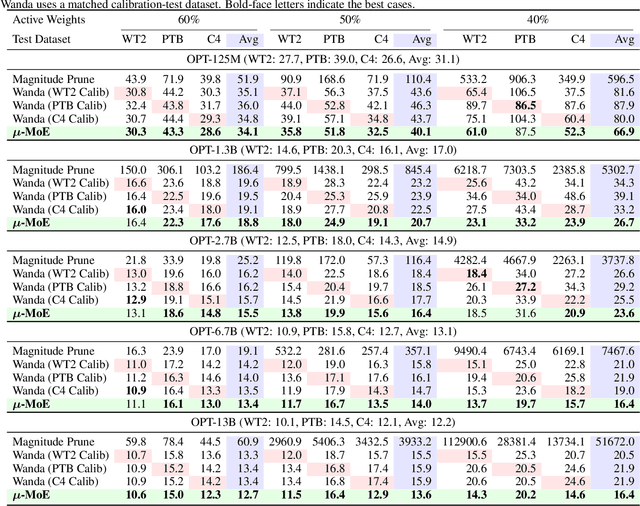
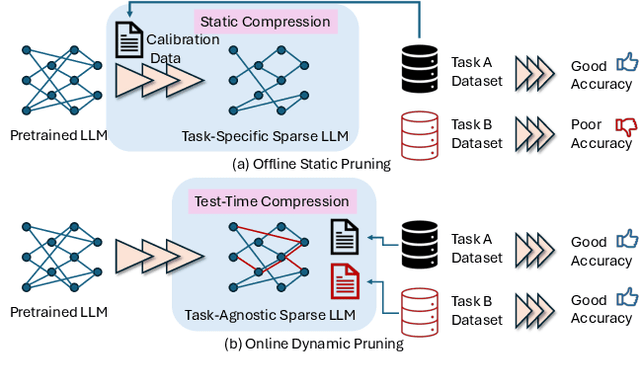
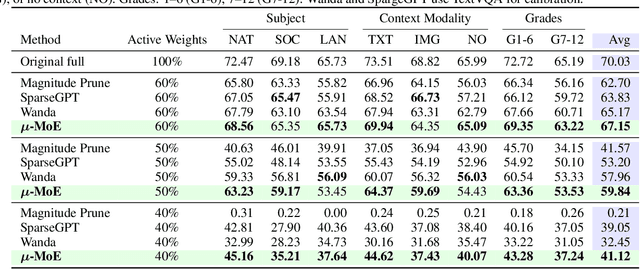
To tackle the huge computational demand of large foundation models, activation-aware compression techniques without retraining have been introduced. However, since these rely on calibration data, domain shift may arise for unknown downstream tasks. With a computationally efficient calibration, activation-aware pruning can be executed for every prompt adaptively, yet achieving reduced complexity at inference. We formulate it as a mixture of micro-experts, called $\mu$-MoE. Several experiments demonstrate that $\mu$-MoE can dynamically adapt to task/prompt-dependent structured sparsity on the fly.
LatentLLM: Attention-Aware Joint Tensor Compression
May 23, 2025Modern foundation models such as large language models (LLMs) and large multi-modal models (LMMs) require a massive amount of computational and memory resources. We propose a new framework to convert such LLMs/LMMs into a reduced-dimension latent structure. Our method extends a local activation-aware tensor decomposition to a global attention-aware joint tensor de-composition. Our framework can significantly improve the model accuracy over the existing model compression methods when reducing the latent dimension to realize computationally/memory-efficient LLMs/LLMs. We show the benefit on several benchmark including multi-modal reasoning tasks.
Range Image-Based Implicit Neural Compression for LiDAR Point Clouds
Apr 24, 2025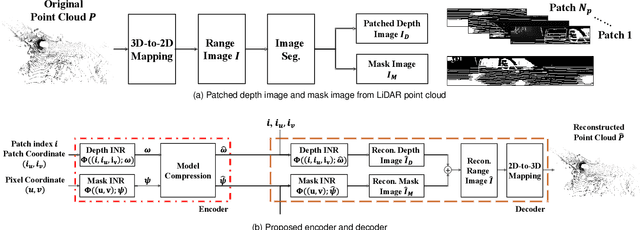
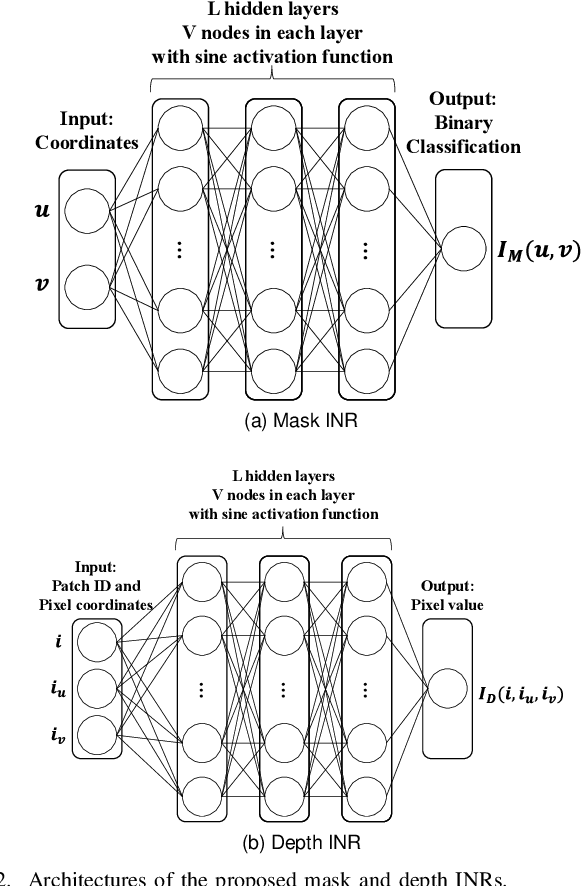
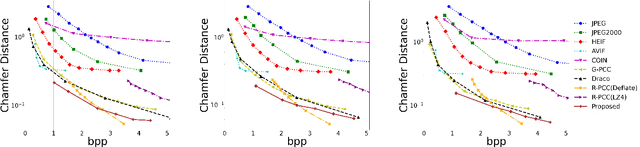
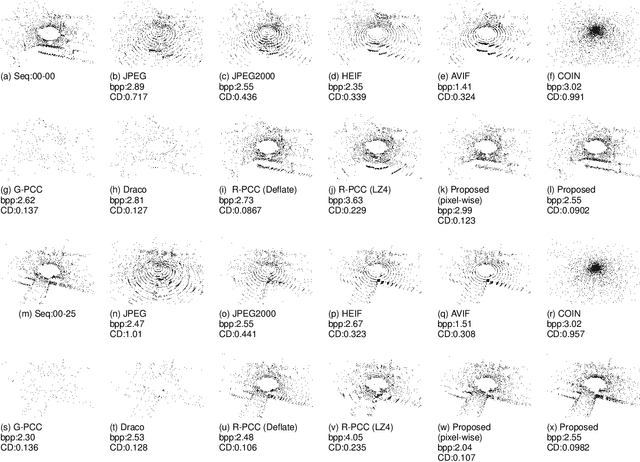
This paper presents a novel scheme to efficiently compress Light Detection and Ranging~(LiDAR) point clouds, enabling high-precision 3D scene archives, and such archives pave the way for a detailed understanding of the corresponding 3D scenes. We focus on 2D range images~(RIs) as a lightweight format for representing 3D LiDAR observations. Although conventional image compression techniques can be adapted to improve compression efficiency for RIs, their practical performance is expected to be limited due to differences in bit precision and the distinct pixel value distribution characteristics between natural images and RIs. We propose a novel implicit neural representation~(INR)--based RI compression method that effectively handles floating-point valued pixels. The proposed method divides RIs into depth and mask images and compresses them using patch-wise and pixel-wise INR architectures with model pruning and quantization, respectively. Experiments on the KITTI dataset show that the proposed method outperforms existing image, point cloud, RI, and INR-based compression methods in terms of 3D reconstruction and detection quality at low bitrates and decoding latency.